
Maître Nebolsine, I bought a house and discovered a roof leak problem a few months after the purchase; my notary mentioned a "hidden defect" (*vice caché*). Could you explain what that means?
A hidden defect is a flaw that renders the purchased property unfit for its intended use, or that diminishes its utility to such an extent that you would not have bought it—or would have paid a lower price for it—had you been aware of the defect. Example: "widespread rotting of structural components... originating from the fact that the timber structure (half-timbering) was encased in a thick cement-based render.
This prevented the wood from 'breathing,' leaving it no choice but to absorb moisture generated by daily living inside the house.
This lack of ventilation led to fungal growth, which caused the rotting." Rouen Court of Appeal, 1st Civil Chamber, February 11, 2026, No. 23/02773.
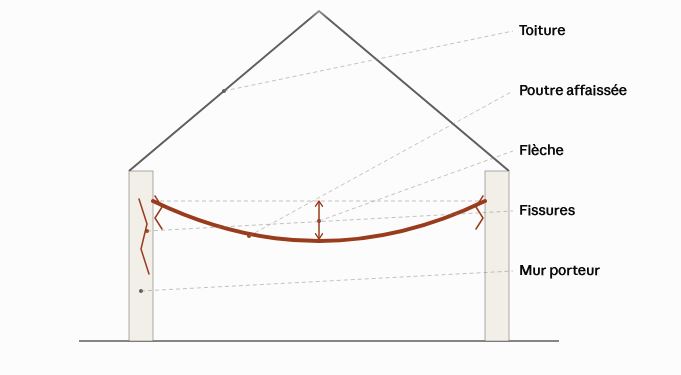
Case law consistently classifies the following as hidden defects: structural issues (widespread rotting of timber framing, sagging floors, vaults in danger of collapse), major roofing and waterproofing faults (severe dilapidation, defective repairs, massive water ingress, rising damp), and unsanitary conditions linked to moisture and wood-destroying fungi (Versailles Court of Appeal, February 24, 2006, No. 04/07610; Bourges Court of Appeal, September 13, 2012, No. 11/01621; Boulogne-sur-Mer Judicial Court, September 9, 2025, No. 23/02013). Disputes primarily center on the distinction between apparent and hidden defects (the level of reasonable inspection expected of the buyer) and the enforceability of non-warranty clauses, which are frequently set aside in cases of bad faith or where the seller is deemed to be a professional (Article 1642 of the Civil Code; Article 1643 of the Civil Code; Rouen Court of Appeal, February 11, 2026, No. 23/02773).
Article 1641 of the Civil Code stipulates that the seller is liable for hidden defects that render the property unfit for its intended use or that diminish its utility to such an extent that the buyer would not have purchased it—or would have offered a lower price—had they been aware of the defect. Not all issues discovered after a sale necessarily qualify as hidden defects. To invoke the legal warranty against hidden defects:
1) the defect must be hidden—meaning it was not apparent at the time of purchase (i.e., it did not require a technical inspection or dismantling to be detected);
2) it must render the property unfit for its intended use or severely diminish its utility (e.g., abnormal dampness, water leaking inside the house);
3) it must have existed prior to the sale. Article 1641 of the Civil Code stipulates that the seller is liable for hidden defects that render the property unfit for its intended use, or that impair such use to such an extent that the buyer would not have purchased it—or would have offered a lower price—had they been aware of the defects. For legal action to be contemplated, the court must examine several key factors: the severity of the defect, the fact that it was not apparent at the time of purchase, and its existence prior to the sale. The challenge often lies in the burden of proof. It must be demonstrated that the problem existed before the sale...
The role of the court-appointed expert is therefore crucial.

Pas de contribution, soyez le premier