
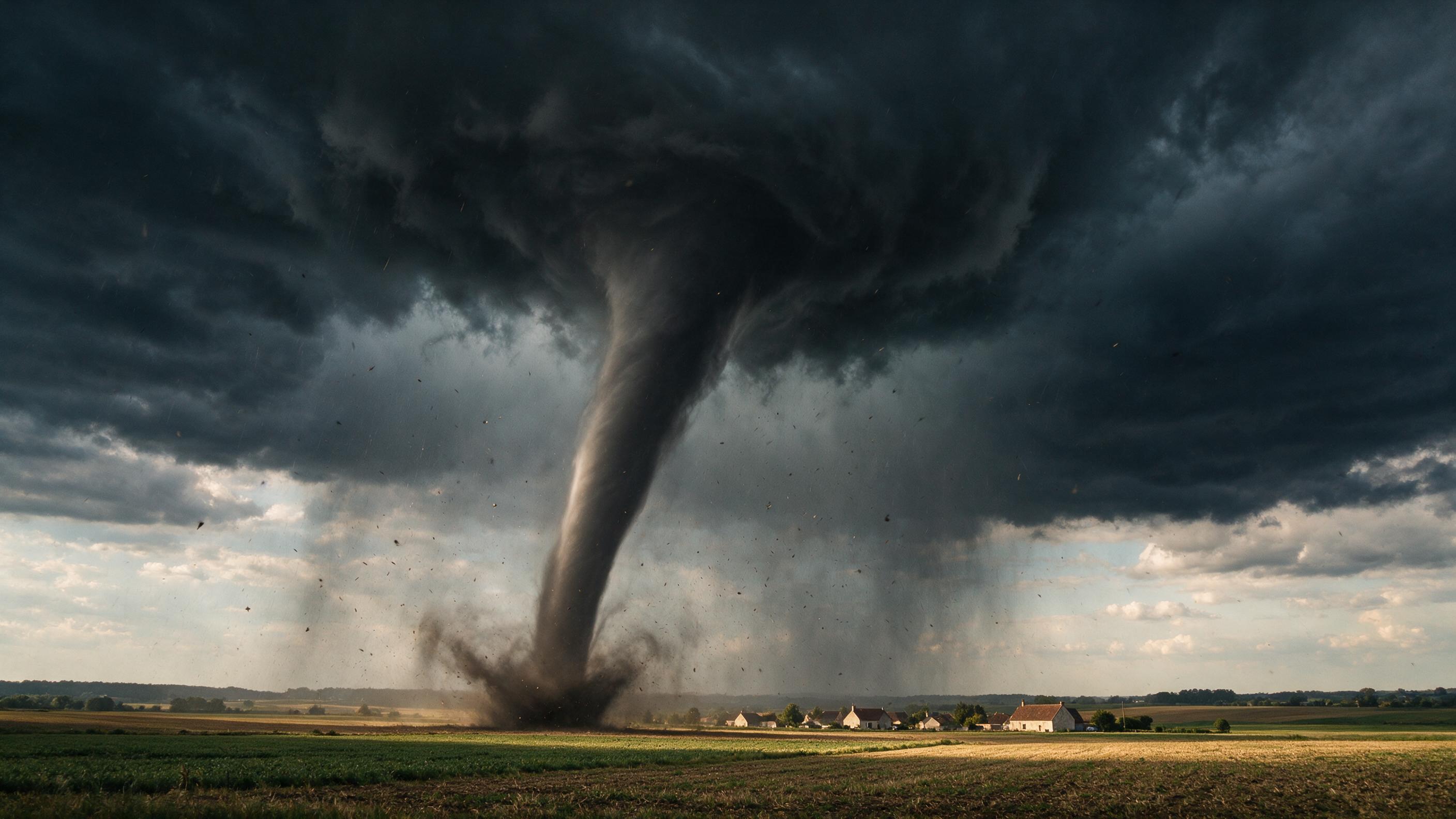
Compensation for damages and required steps following a tornado or storm event Tornado of August 24, 2026, in Pomas and neighboring municipalities: applicable compensation scheme and procedures.
A violent tornado that struck the Pomas area—south of Carcassonne (Aude)—on Monday, August 24, 2026, caused significant damage to homes and property. How can compensation be obtained?
1. Has a state of natural disaster been declared?
To date, no interministerial decree recognizing a state of natural disaster has been published for this event. Régis Banquet, President of Carcassonne Agglo, announced that a letter would be sent to the Prime Minister requesting recognition of a "natural disaster" state; however, this ongoing process has not yet resulted in an official decree. https://www.carcassonne-agglo.fr/actualite/regis-banquet-sollicite-le-premier-ministre-pour-aider-a-la-reconstruction-de-pomas/ Distinction between "storm" and "natural disaster" and the interplay of coverage regimes
Article L122-7 mandates that contracts covering fire or property damage must include coverage for the "effects of wind caused by storms, hurricanes, and cyclones.
" However, it excludes winds from cyclonic events where 10-minute average speeds reach 145 km/h or gusts reach 215 km/h; such events fall under the "natural disaster" regime.
For example: Ministerial orders from 2023 and 2025 demonstrate that for episodes classified as "cyclonic winds" in mainland France—which do not reach these thresholds and are not associated with a tropical cyclone event—municipalities are consistently denied "natural disaster" recognition.
The stated reasoning is that the phenomenon "does not meet the criteria set by Article L.122-7" and that "damage caused by violent winds (tornadoes, storms, etc.) is covered by the 'storm' guarantee" in property damage insurance policies.
(Order of Sept. 18, 2023; Order of Oct. 15, 2025; Order of Oct. 16, 2023).
Consequently, damage linked to this tornado falls, in principle, under the "storm/hurricane/weather event" coverage of your home insurance policy (comprehensive home insurance), rather than the specific "natural disaster" regime.
2. Steps to take with your insurance company If your property has been damaged by the tornado, it is recommended that you:
1. Report the loss to your insurer without delay, via registered letter with acknowledgment of receipt or through your online portal, + EMAIL, specifying:
o the date and approximate time of the damage (August 24, 2026, late afternoon);
o the nature of the damage (roofing, windows/doors, walls, outbuildings, etc.);
o the fact that the damage resulted from the tornado that occurred in the municipality of Pomas / the affected area.
2. Adhere to contractual deadlines: most policies require a claim to be filed within 5 business days (or as specified in your policy clause) of discovering the damage.
3. Keep and submit supporting documents:
o photos and videos of the damage;
o invoices or quotes for repairs or securing the property;
o any official assessments or expert reports, including those from the town hall or emergency services, if available.
4. Arrange for an assessment: your insurer will appoint an expert. If necessary, you may be assisted by an expert of your own choosing (at your own expense, unless the policy states otherwise—check your insurance policy's general terms and conditions).
When might the insurer cover the cost of the policyholder's expert?
Two contractual mechanisms are common:
a) "Expert fees" coverage (or "coverage for a joint/independent assessment")
• Some home or commercial multi-risk policies include a clause such as: "coverage of the policyholder's expert fees" or "assessment fees."
• It provides for full or partial reimbursement of your expert’s fees, often: o either as a percentage of the claim amount (e.g., 5%), o or subject to a cap (e.g., €1,000, €1,500, etc.).
You should check:
• the exact name of the coverage in the general or specific terms and conditions;
• the cap and the conditions for application (minimum claim amount, requirement to initiate an adversarial assessment process, etc.).
b) "Legal protection" coverage • Legal protection can also cover all or part of the costs for expert assessments and legal counsel in the event of a dispute with the insurer. •
Here again, everything depends on the caps and conditions of the policy taken out.
3. In the event of a refusal or under-compensation
If your insurer:
• refuses coverage on the grounds that the event is not covered, or
• proposes compensation that is clearly insufficient given the damage, you can:
• request a written explanation of the refusal or the compensation calculation;
• refer the matter to the insurance ombudsman (contact details appear in your general terms and conditions);
• and, where applicable, initiate legal proceedings to assert your rights based on your contract and the provisions of the Insurance Code regarding storm coverage and the insurer's obligations. (Note the 2-year limitation period: In insurance, the golden rule is a **2-year** limitation period—starting from the date of the event—to report a claim or initiate legal action; failure to do so results in the loss of any right to compensation.)


Pas de contribution, soyez le premier